Artificial intelligence art is artistic content generated or assisted by AI programs. That is how Wikipedia's AI art entry defines it. Today it mostly means one thing: you describe a picture in words, and a model turns that description into an image in seconds.
You do not need to draw, pay or install anything to make some. FreeGen is a free, browser-based text-to-image generator. As of November 2026 it needs no signup, and it says your first image is ready in about 10 seconds. You type a prompt, pick one of five aspect ratios, and generate.
The rest of this page covers how the images are made, where the idea came from, and the argument over whether it counts as art. It also shows what different prompts produce, so you know what to type when you try it.
How AI art is made
Most AI art today comes from diffusion models. A diffusion model starts from random noise, like TV static. It then removes that noise step by step, steering each step towards an image that matches your text. The model learned what "lighthouse", "watercolor" or "morning fog" look like by training on huge numbers of captioned images.
There are two common ways to give it instructions:
- Text-to-image. You write a prompt and the model builds a picture from nothing but those words.
- Image-to-image. You upload a reference image and a prompt. The model keeps some of the reference, such as its layout, pose or colours, and changes the rest. Turning a phone snapshot of your dog into a watercolor is a typical use.
Different generators run on different models, and some tools let you choose between several. Z-Image is one of the image models offered by LTX Studio as of November 2026, alongside FLUX.2 Pro and Nano Banana Pro. If you want more on how model names and generators differ, our guide to how AI image generators work covers it.
A short history, from drawing machines to diffusion
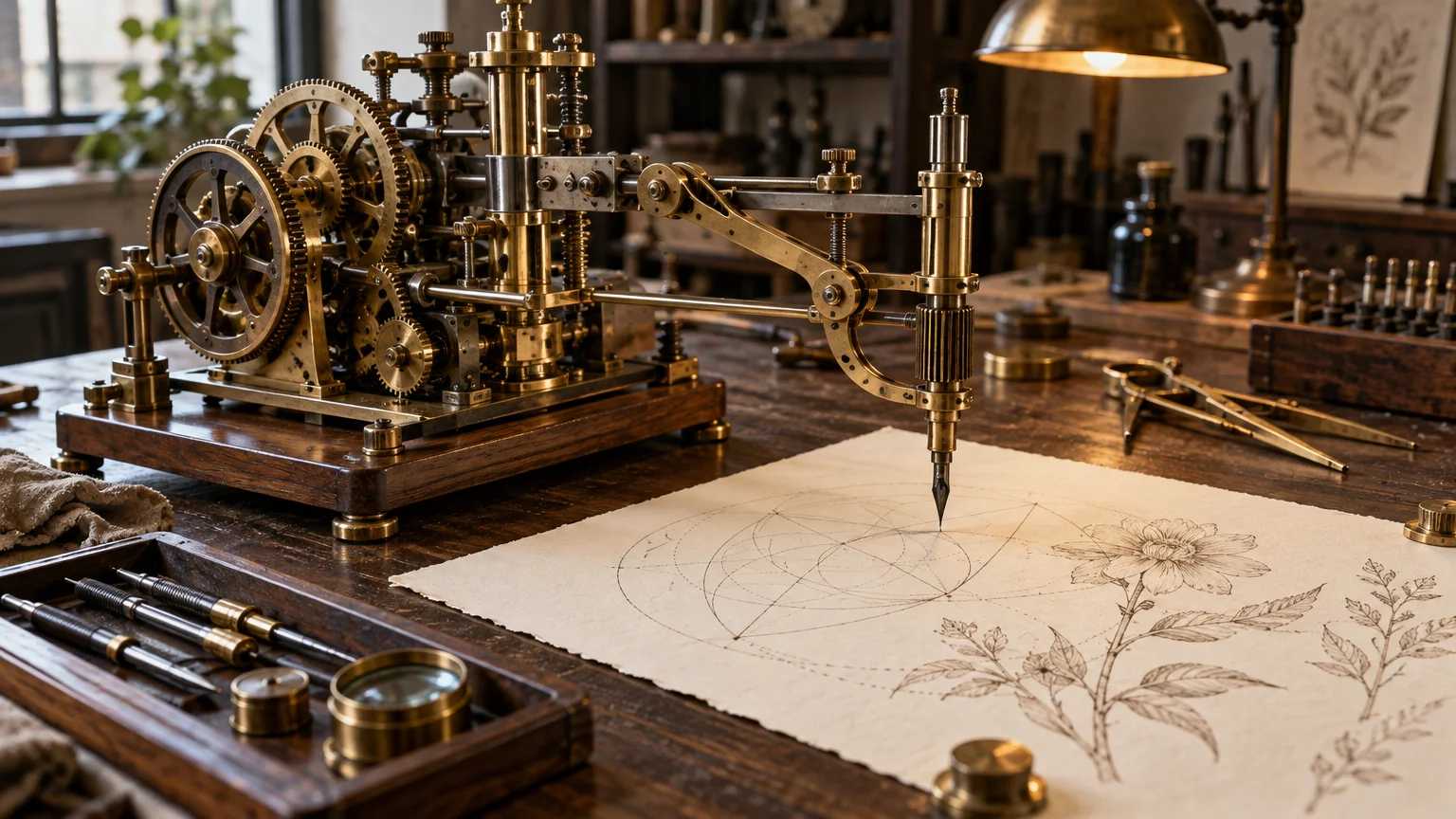
Machines that make pictures are much older than the current tools. Maillardet's automaton, built around 1800, was a clockwork figure that could draw and write. It followed fixed instructions, but it set up the question people still ask: if a machine made the drawing, who is the artist?
The academic field of AI began at a Dartmouth College workshop in 1956. A decade later the first serious AI art system appeared. Harold Cohen started developing AARON in the late 1960s at UC San Diego. AARON was shown at the Los Angeles County Museum of Art in 1972. Karl Sims then won the Golden Nica at Prix Ars Electronica in both 1991 and 1992 for work made with evolving computer programs.
The modern wave started around 2015:
- 2015: A Google team released DeepDream, which turned photos into swirling, dog-faced hallucinations. Diffusion models were also first proposed that year.
- 2018: Artbreeder launched, using the StyleGAN and BigGAN models to blend faces and landscapes. The same year, Edmond de Belamy, a portrait by the Paris collective Obvious, sold at Christie's New York for US$432,500. That was almost 45 times its estimate.
- Early 2021: Diffusion models overtook the older GAN approach in image quality.
- December 2021 to August 2022: The latent diffusion model was published and became the basis for Stable Diffusion. It was developed by Stability AI, CompVis at LMU Munich, and Runway.
- 2022: Théâtre D'opéra Spatial, made with Midjourney, won the emerging artist division of the Colorado State Fair fine art competition. That win made AI art front-page news.
- August 2023: Ideogram was released, known for getting text inside images legible.
- November 2025: Flux.2 debuted from Black Forest Labs, a company founded by the researchers behind Stable Diffusion.
All of those facts are from Wikipedia's history of AI art. The jump from AARON's line drawings to a photo-like image from one sentence took about fifty years. Most of the visible change happened in the last five.
Is it really art? The argument in fair terms
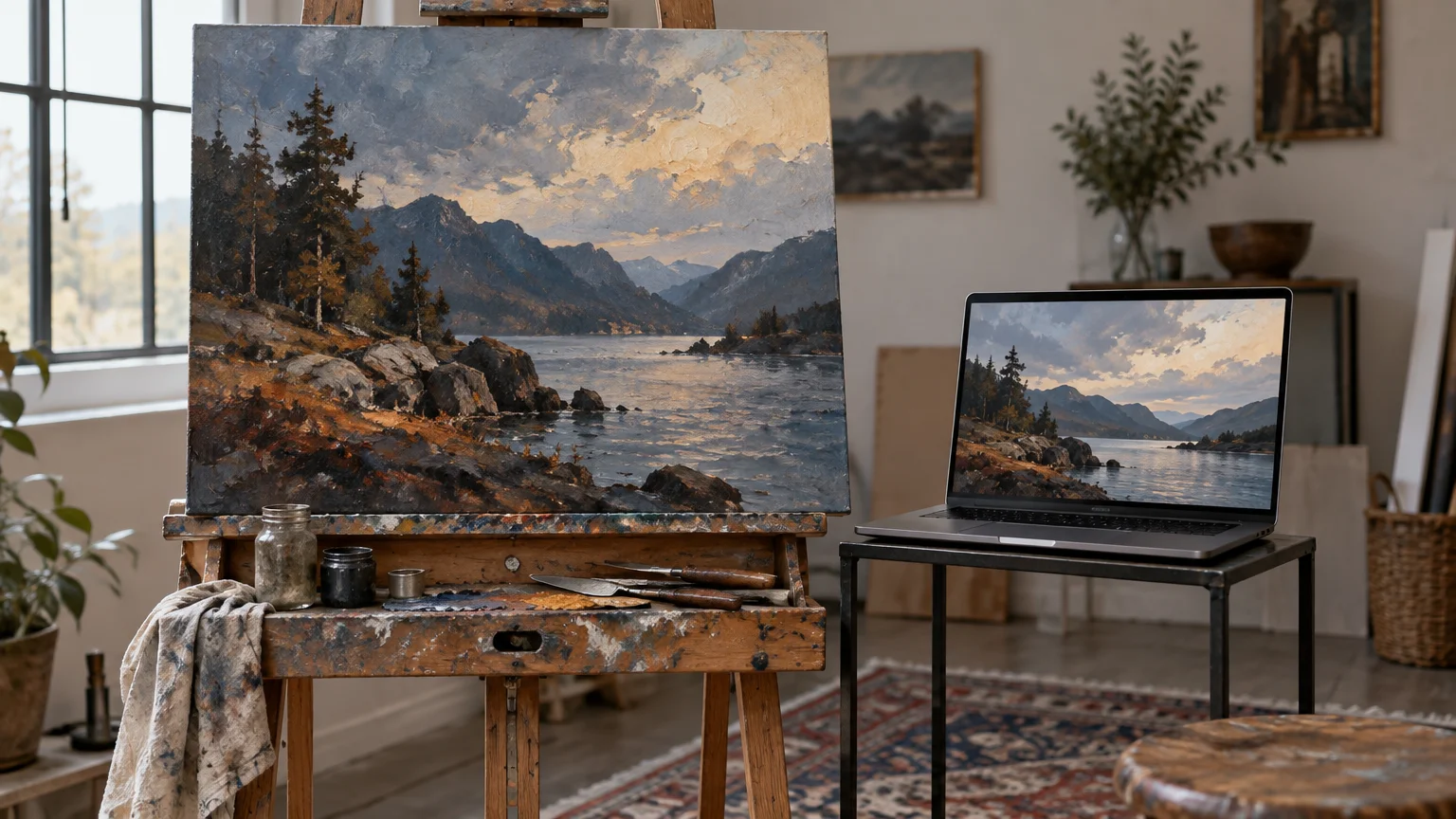
The short answer is that people disagree, and both sides have a point.
The case against is simple. You typed a sentence and a machine did the work. There is no brushwork, no years of practice, no hand in it. Many artists also object that the models learned from millions of images, including living artists' work, without asking or paying them. Those objections are about labour and consent as much as aesthetics, and they are not settled.
The case for usually leans on history. Photography emerged as a technology in the 1820s, and painters of the time made the same "it's just a machine" complaint about cameras, as Craig Boehman argues. Using chance and automation to make art also goes back to the avant-garde movements of the 1920s and '30s, according to Christie's, as quoted by Coursera. On this view, the art is in the choices: what to ask for, which result to keep, and what to do with it next.
A practical middle position works for most people. An image you generate in ten seconds for a birthday card is a picture you made with a tool. Whether it is art depends on intent and effort, the same as a phone photo. What matters for you, day to day, is whether it does the job you made it for.
What AI art looks like: prompts and the styles they produce
There is no single "AI art style". The model produces whatever style your prompt describes. If you name no style, you usually get a glossy, generic look, which is the look people tend to call "AI art". The quickest way to escape it is to name the medium and the light.
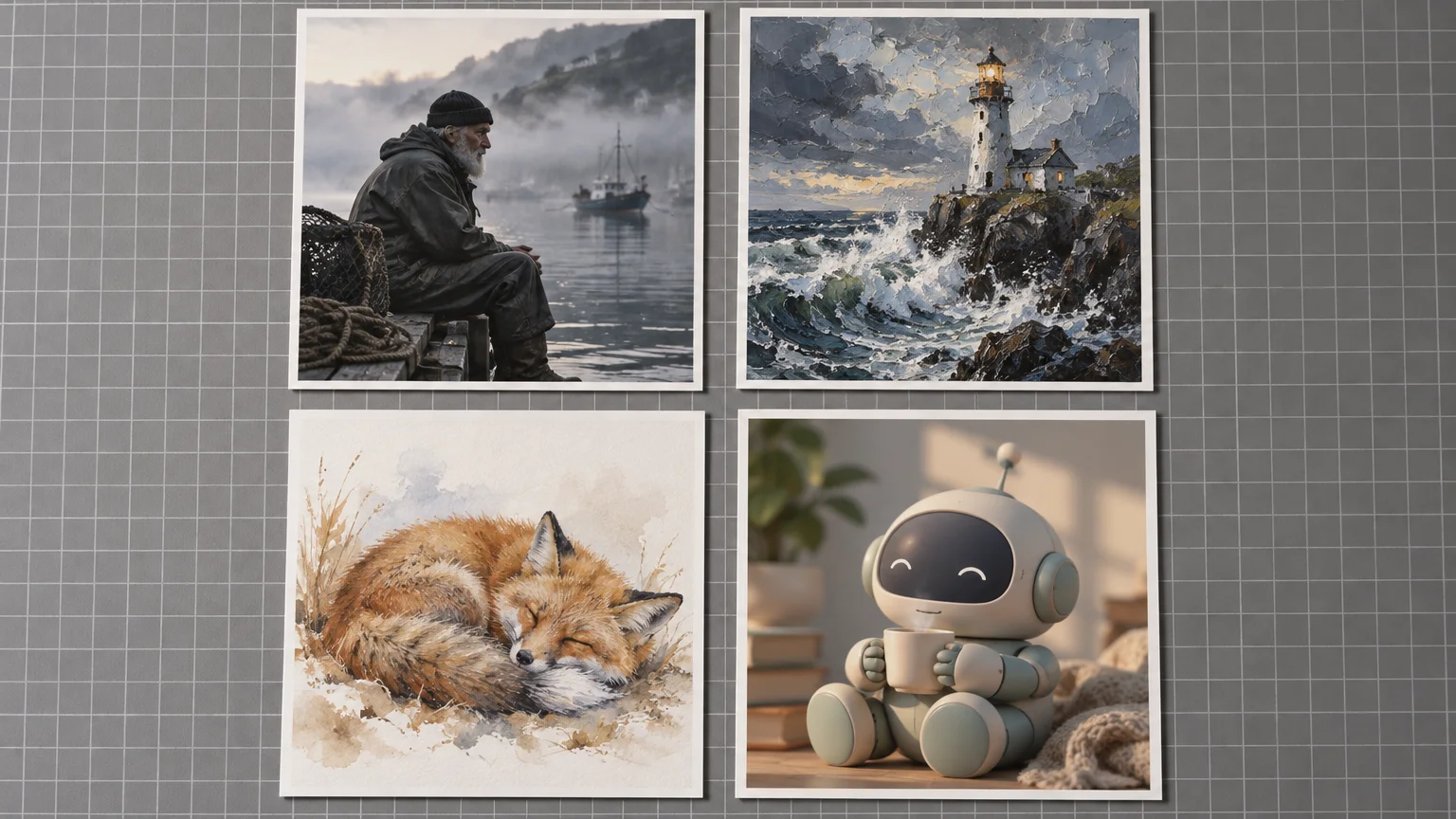
Below are prompts you can copy into the generator as written, grouped by the kind of image they aim for. For real prompt and result pairs, the FreeGen examples gallery shows 15+ images, each next to the full prompt that made it. They cover realistic photography, artistic styles, cute characters and futuristic concepts.
Photographic
Photo-like AI images are sometimes called synthography, a proposed term for generating photographic images with AI. Camera language helps here:
elderly fisherman mending a net on a wooden dock, early morning fog, soft side light, 85mm portrait photo, shallow depth of field
"85mm" and "shallow depth of field" push towards a portrait with a blurred background. "Soft side light" shapes the face. Leave them out and you tend to get flat, evenly lit stock-photo results.
Painterly
Name the paint and how it is applied:
lighthouse on a rocky coast during a storm, thick impasto oil painting, dramatic sky, muted blues and greys
a fox sleeping under a maple tree, loose watercolor, soft washes, white paper showing through
"Impasto" asks for heavy, textured strokes. "White paper showing through" is a detail real watercolors have, and it moves the result away from a digital look.
Characters and illustration
For cute or cartoon subjects, keep the background simple so the character stands out:
a cute round robot holding a cup of tea, pastel colors, soft 3D render, plain cream background
For more themed prompts in this spirit, see our list of funny background prompts. If you want outfit and fashion ideas, try the dress prompts.
Futuristic and concept art
Wide shots and named colours work well for scenes:
a night market in a floating city, rain-slicked walkways, paper lanterns, wide cinematic shot, blue and magenta lighting
This prompt asks for lanterns rather than neon signs on purpose. Signs invite the model to write words, and generated lettering often comes out as convincing nonsense.
Making your first piece
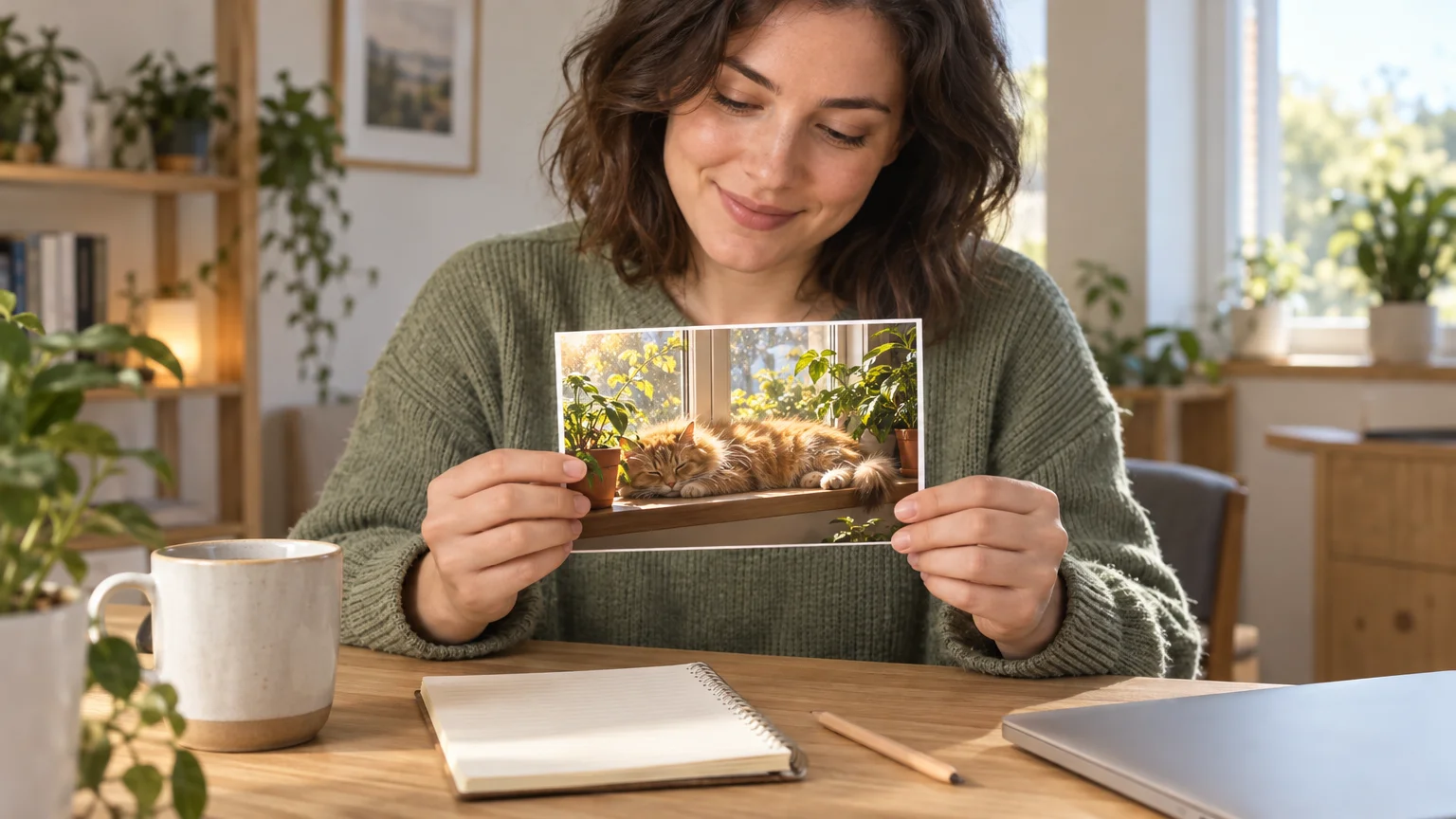
A first image takes about a minute, including the time to think of what you want. On FreeGen it goes like this:
- Open freegen.app. There is no account to create.
- Type a prompt describing the picture you want.
- Pick an aspect ratio. There are five. Choose wide for a desktop wallpaper or a YouTube thumbnail, tall for a phone story, and square for a feed post.
- Generate, look at the result, and change one thing in the prompt at a time.
A prompt that works, in one line
A useful order is subject, then setting, then light, then medium or style, then framing. Short comma-separated phrases tend to work better than full sentences. LTX suggests 15 to 50 words as a good range for an effective prompt.
Here is the difference in practice. A weak first try:
a cat
The same idea, rewritten:
a ginger cat asleep on a sunny windowsill, houseplants around it, warm afternoon light, film photo, close-up
The first leaves every decision to the model, so you get an average cat. The second decides the colour, mood, light and camera for you.
When something looks wrong
Warped hands, extra fingers and garbled text are the usual problems. The simple fixes are often enough: frame the shot so hands are out of view, ask for a close-up, or leave lettering out and add it afterwards in any basic editor. Our AI image generators guide goes through hands, faces and text in more detail.
What you can do with the images you make
For personal use, such as wallpapers, cards, school projects or a profile picture, there is little to worry about. Selling the images or building a brand on them raises two separate questions. One is copyright. The other is what the tool's own terms allow.
On copyright in the US, the position is clearer than many people think. On March 16, 2023, the US Copyright Office issued guidance on works containing AI-generated material. It found that a prompt does not meet the human authorship requirement, according to Legal500's summary. A month earlier, on February 21, 2023, the Office had reissued the registration for Zarya of the Dawn, a webcomic by Kristina Kashtanova. She had not disclosed that its pictures were made with Midjourney. The new certificate covered only her text and the arrangement of the images, not the images themselves. Then in August 2023, a US district court ruled AI art ineligible for copyright because it lacked human authorship.
In plain terms, you can generally use a generated image, but you probably cannot stop someone else from copying it. If you add real creative work of your own, such as writing, layout or substantial editing, that part can be protected. Separately, read the terms of whichever tool you use before you sell anything, because "commercial use" is set by those terms. This is a general summary as of November 2026, not legal advice.
Frequently Asked Questions
What is the AI art style called?
There is no single name, because a model can imitate almost any style you describe. The polished, slightly glossy look of unstyled results is often just called "AI art". Photo-like AI images have a proposed name of their own: synthography.
How is artificial intelligence used in art?
Most people use it to generate images from a text prompt, or to transform a reference image into a new style. Artists also use it for sketches, mood boards and concept work they then refine by hand. Earlier systems like Harold Cohen's AARON were built by artists as long-running creative projects in their own right.
How much does AI art cost?
It can cost nothing. FreeGen is free with no signup as of November 2026, and the site says it has no limits or watermarks. Paid tools charge in different ways, so check each one's current pricing page before you subscribe.
Is AI art making money?
Some has, in rare cases. Edmond de Belamy sold at Christie's in 2018 for US$432,500. Everyday images are a different matter, because copyright protection for purely AI-made images is weak in the US. Money tends to come from what people build around the images rather than the images alone.
Who made the first AI art?
Harold Cohen's AARON, started in the late 1960s at UC San Diego, is usually counted as the first significant AI art system. It was shown at the Los Angeles County Museum of Art in 1972. Drawing machines go back further, to Maillardet's automaton around 1800, but that followed fixed clockwork rather than any kind of learning.
Has AI art won real art competitions?
Yes. Théâtre D'opéra Spatial, made with Midjourney, won the emerging artist division of the 2022 Colorado State Fair fine art competition. The win set off much of the public debate about whether AI art belongs in art contests at all.
Do I need to be able to draw to make AI art?
No. You need to describe what you want clearly, which is a skill you build by trying prompts and adjusting them. Being able to draw helps if you want to sketch a reference image for image-to-image work, but it is not required.
Final Thoughts
AI art is the latest step in a long line of machine-made pictures, from Maillardet's automaton to AARON to today's diffusion models. The debate about whether it is real art will keep going, and the copyright rules in the US are already fairly clear: the prompt alone does not make you an author.
The practical side is simpler. Name your subject, the light and the medium, and you will get far better results than a one-word prompt gives you. If you want to see that for yourself, pick any prompt above and try it in FreeGen. Then browse the examples gallery to see which prompts made which images.